If you’ve ever stepped into a space where a circular panoramic elevator glides smoothly between floors—glass panels catching natural light, the curve of the car matching the building’s modern lines, and every floor’s view unfolding in a seamless circle—you know it’s more than a lift. It’s a statement piece, a functional work of design, and sometimes the defining feature of a building’s interior. As a Full Circular Panoramic Elevator supplier, I get asked this question at least once a week: How much does one actually cost? Full Circular Panoramic Elevator
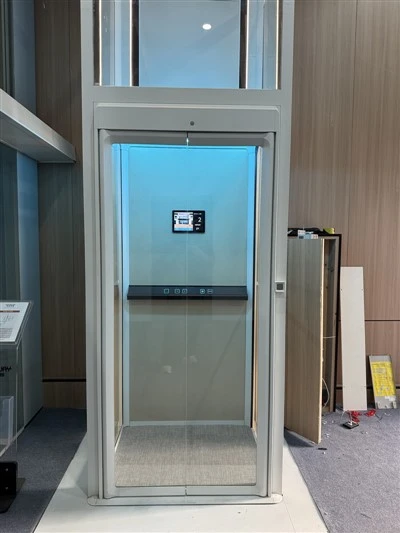
It’s not a number I can rattle off in a sentence, and that’s by design. A circular panoramic elevator isn’t a off-the-shelf commodity. Every project has unique constraints, needs, and expectations, and pricing ties directly to those details. Over the 12 years I’ve been in this business, I’ve priced systems for a 3-story boutique hotel in rural Vermont, a 15-story mixed-use building in downtown Chicago, and a 8-story residential tower in coastal Singapore. No two were alike, and neither was their price tag. Let me break down what factors go into that cost, and give you a realistic picture of what you can expect to invest when you work with a manufacturer that prioritizes safety, durability, and that iconic panoramic view.
First, let’s start with the core structure, because circular panoramic elevators are not your standard rectangular box lift. The shape is non-negotiable for us—we build full circular cars, meaning both the walls and the cab curve 360 degrees, so every occupant gets an unobstructed view. That requires custom fabrication in a way that standard elevators don’t. For a small, low-rise system (3 to 5 floors, for example) with a 6-foot internal diameter—big enough for 4 to 6 people, roughly—the structural steel and custom glass alone add 20 to 30 percent to the cost of a comparable rectangular elevator. The glass isn’t just any tempered glass, either. It needs to be impact-resistant, UV-protective for interior installations, and rated for structural load, because it’s a load-bearing part of the cab’s wall. For projects in high-wind areas, like coastal Florida or Hong Kong, we use laminated glass that adds another 10 to 15 percent to the glass package, to prevent shattering if a storm brings debris.
The drive system is another major variable. Standard elevators use either hydraulic or traction systems, and we use both depending on the project, but their cost differs. For low-rise (3 to 6 floors) and lighter capacity (up to 1,000 pounds), hydraulic systems are more affordable. A hydraulic full circular panoramic elevator for this range will have a base cost starting around $75,000 to $100,000. But that’s just the equipment. If we’re installing it outside, exposed to the elements, we have to weather-seal the entire cab, add a corrosion-resistant coating to the steel framework, and include a redundant drive system to handle power outages. That can add another $15,000 to $25,000. For mid-rise (7 to 12 floors) or higher capacity (up to 2,000 pounds), traction systems are the better choice for long-term energy efficiency and performance. A traction full circular panoramic elevator here starts at $120,000 to $180,000, and again, exterior or coastal installations add 15 to 20 percent to that total.
Capacity and speed sound like basic specs, but they have a bigger impact on cost than you might think. If you’re only transporting 2 people between 3 floors, you don’t need the same motor, pulley system, or even the same size structural frame as a lift that carries 10 people between 12 floors. I once worked with a client who wanted a circular elevator for a small historic retail building in Savannah, Georgia. The space was tight—only 5-foot internal diameter, 4 floors, and maximum capacity 800 pounds. We built that for $82,000, including interior finishes, but when a developer in Miami wanted a circular elevator for a luxury penthouse, with 10-foot internal diameter, capacity for 12 people, and a speed of 500 feet per minute, that came in at $210,000, not including installation. That’s a huge gap, and it’s all tied to how much weight the system has to move, how fast it needs to get there, and how much the custom frame has to support that.
Interior and custom finishes are where the cost can really fluctuate, and this is where a lot of my clients don’t realize they can adjust to stay on budget. The basics include the steel cab frame, standard tempered glass, and a simple control panel. But if you want custom lighting that changes color to match the building’s interior, touchscreen control panels, or even integrated smart home features that sync with the building’s automation system, that adds up. For a residential project, many clients opt for wood or metal trim that matches their cabinetry or flooring, while commercial projects often want branding elements—like etched glass with the building’s logo, or LED strips that run along the edge of the cab’s curve. A client last year wanted a circular elevator for a restaurant in Las Vegas, where the glass was tinted at the top to create a private feel for diners and clear at the bottom for views of the lobby. That custom glass tinting and gradient finish added $12,000 to the total cost, which was worth it to them because it tied the elevator directly to their restaurant’s theme.
Installation is another big chunk that’s easy to overlook. Circular panoramic elevators aren’t set up in a standard elevator shaft. They often require a custom pit, because the circular base can’t fit into a rectangular concrete shaft. If you’re retrofitting an existing building, that excavation and modification can add a lot of cost. For new construction, the builder can coordinate with our team to pour a reinforced circular pit before we arrive, which cuts down on installation time and cost drastically. I worked on a project in Boston a few years ago where the building was already finished, and we had to cut a circular hole in the 3 existing floors to install the elevator. That installation alone took 6 weeks and cost almost twice as much as it did for a new build in Austin, where the pit was built to our specs during construction. For new construction, installation costs typically add $20,000 to $50,000, while retrofits can add $50,000 to $100,000 or more, depending on the existing space.
Then there’s the long-term stuff—maintenance and code compliance—and that’s a factor in the total cost over time, but it also affects the upfront investment. Our elevators are built to meet ASME A17.1 safety standards, which are the gold standard in North America, and equivalent international codes for other markets. That means we use rust-proof steel, redundant braking systems, and safety sensors that detect obstructions before they move. The good news is that because our circular elevators are custom, we build in easy access for maintenance, so annual maintenance costs are actually comparable to standard rectangular elevators—around $1,200 to $2,500 a year, depending on size and location. The upfront cost for code certification and testing is included in the base price, so you don’t have to pay extra to make sure the elevator is legal to use.
Now, let’s talk about the edge cases that push cost higher. If you’re installing a full circular panoramic elevator outdoors, like on the side of a skyscraper, the cost jumps. Exterior elevators have to handle temperature changes, wind, rain, and even snow. The glass has to be insulated to prevent condensation, the steel frame has to be hot-dip galvanized to resist corrosion, and the drive system has to be weather-sealed. An exterior circular elevator for a 10-story building in Toronto, for example, will cost 30 to 40 percent more than an interior one of the same size. We built one in Vancouver a few years ago that’s mounted on the exterior of a boutique office building, and that total cost, including installation, came in at $275,000—way higher than an interior system of the same capacity. Capacity also plays a role here; for super high-end projects, like a private residential circular elevator in a penthouse with custom marble floors, integrated audio, and smart controls, the total cost can top $300,000, not including installation.
I often get asked if there’s a way to get a lower cost for a circular panoramic elevator. The short answer is, yes, but it comes with tradeoffs. Going with a smaller, lower capacity system, standard finishes, and an interior installation will keep cost at the lower end of the range, around $100,000 for a basic 4-story, 6-person system. But if you want that iconic panoramic view that makes a space stand out, you can’t cut corners on the structure or the safety features. I’ve seen clients try to save money by using off-the-shelf glass or a cheap hydraulic system, and within 2 years, they were dealing with leaks, glass scratches, and safety issues that cost them twice the initial savings to fix. For us, quality isn’t an option—our name is on every elevator we build, and we stand behind our work. That means using the best materials, custom fabrication, and expert installation, even if it means the price is higher than some competitors.
Another thing to keep in mind is that these numbers are for North American installations. If you’re based in Europe, Asia, or Australia, pricing may vary due to shipping costs, local labor rates, and different code requirements. For example, a circular panoramic elevator we built for a hotel in Seoul came in slightly lower than a comparable system in New York, because local steel fabrication and installation were more affordable there. But the core factors—size, capacity, drive system, finishes, installation complexity—remain the same, regardless of location.
At the end of the day, a full circular panoramic elevator is an investment in the space it serves. It’s not just a way to move between floors; it’s a feature that increases property value, enhances the user experience, and becomes a focal point of the building. For a small boutique hotel, it might be the reason guests choose your property over the chain down the street. For a residential tower, it could be the selling point that makes penthouse units worth 15 percent more than comparable units without a panoramic lift. The cost is significant, but when you factor in the long-term value it adds, it’s often well worth the price.

If you’re planning a project and want a real, accurate cost for your specific needs, the best thing to do is reach out. We don’t give generic quotes over the phone, because every project is different. We’ll send a team member to your site to measure the available space, discuss your goals, your budget, and any specific requirements (like exterior installation, high capacity, custom finishes), and put together a detailed, transparent quote that includes every cost—equipment, fabrication, installation, testing, and even a 5-year maintenance plan if you want it. There’s no hidden fees, no fine print, just a straight-forward look at what your circular panoramic elevator will cost, and how it will fit your project. Whether you’re building a new home, renovating a historic space, or designing a commercial building, we can work with you to create a system that meets your needs and your budget.
Small Shaft Gantry Frame Panoramic Elevator References
American Society of Mechanical Engineers. (2022). Safety Code for Elevators and Escalators (ASME A17.1).
National Elevator Industry, Inc. (2023). 2023 Elevator Industry Cost and Productivity Report.
International Code Council. (2022). International Building Code (IBC) Chapter 30: Elevators, Escalators, and Conveying Systems.
Zhejiang Homeway Elevator Co., Ltd.
Zhejiang Homeway Elevator Co., Ltd. is one of the most professional full circular panoramic elevator manufacturers and suppliers in China. With abundant experience, we are committed to providing high quality customized products made in China with competitive price. If you’re going to buy CE approved full circular panoramic elevator, welcome to get quotation from our factory.
Address: No.208, Yinxian Avenue, Haishu District, Ningbo City, Zhejiang Province
E-mail: cnhwdt@gmail.com
WebSite: https://www.homewayelevator.com/
