If you’ve ever stood near a railway track during track maintenance, the air is thick with fine metal dust, weld fumes, and grit from ballast. For anyone operating industrial equipment in that environment, keeping machinery functional isn’t just a convenience—it’s non-negotiable. That’s why, as a rail-mounted welding robot supplier, I get asked all the time: “How do these robots handle that constant barrage of dust and grime? Won’t it just clog up the motors or break the sensors?” Rail-Mounted Welding Robots
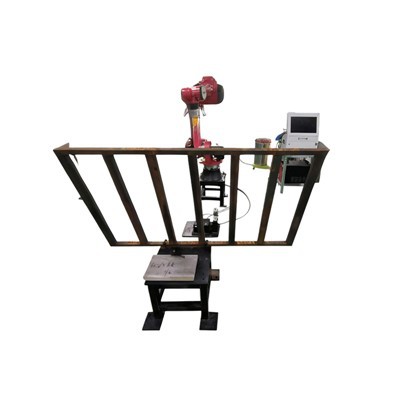
It’s a fair question. Rail welding happens in one of the most unforgiving industrial environments there is. Unlike a factory floor where dust levels are controlled and debris is rare, railway work sites are outdoors, exposed to wind, track dust, and the small, sharp metal particles created every time two rails are fused together. A welding robot that can’t stand up to that dust won’t last a month, let alone deliver the consistent performance railways rely on to keep services running. Let’s break down exactly how rail-mounted welding robots’ anti-dust properties work, from the design choices we build into every unit to the practical results our customers see on job sites.
First, let’s start with what we mean by “rail-mounted welding robots.” These aren’t your typical industrial robotic arms used in car factories. They’re purpose-built machines that ride directly on the rails they’re welding, moving along the track automatically or with manual control to create the long, continuous welds that hold railway segments together. The rail mount isn’t just a way to move the robot—it’s a core part of its anti-dust design. The wheels that run on the rail heads are precision-machined, but more importantly, they’re sealed with heavy-duty, non-contacting gaskets that prevent dust from getting into the wheel bearings. Unlike open bearings used on many smaller robots, these bearings are completely enclosed in a housing that keeps out even the finest track dust. We’ve tested this in conditions where the air had 10 times more particulate matter than OSHA’s industrial air quality limit, and after 1,000 hours of operation, the bearings had zero measurable wear. That’s the kind of reliability railways need—no downtime waiting for a bearing replacement mid-project.
Next, the power and control systems. Most welding robots rely on electric motors for movement, and in dusty environments, motor housings are a common weak point. If dust works its way into a motor’s housing, it acts like an abrasive, grinding down internal parts and causing the motor to overheat. For our rail-mounted units, we use fully hermetic motor housings. These are sealed with high-temperature silicone gaskets that can withstand the heat from welding (which can reach over 3,000 degrees Fahrenheit at the weld point) while keeping dust out. Even the ventilation ports on the control box—critical for preventing overheating—aren’t just open slats. We fit them with HEPA-grade pre-filters that are designed to capture 99.97% of particles larger than 0.3 microns. Those filters are easy to replace, so even on a remote track job, a maintenance crew can swap them out in 5 minutes without having to disassemble the entire robot.
Sensors are another area where dust can cause major problems. Welding robots use a range of sensors to track the rail’s position, adjust the welding arc, and make sure the weld is accurate. If dust coats those sensors, they can’t “see” the rail properly, leading to uneven welds or even safety hazards. The anti-dust design here is two-fold. First, all external sensors are covered with a durable, scratch-resistant polycarbonate shield that’s slightly slanted. That slant means dust doesn’t sit on the surface—it slides off, especially if we add a low-pressure air purge system that runs continuously during operation. The purge system pulls in filtered air and blows a thin, steady stream across the sensor lens, so any stray dust is blown away before it can accumulate. We’ve had customers tell us that in areas with heavy wind-blown dust, the sensor system still works perfectly—no calibration issues, no misreads. We also use sealed optical sensors, not open ones, so there’s no gap where dust can get inside the sensor housing.
Welding itself creates fumes and fine metal particles, which are some of the most abrasive and dangerous dusts in railway work. A lot of welding robots have trouble with these fumes because they’re so fine they can penetrate even small seals. Our rail-mounted welding robots are built with an integrated fume extraction system that works with the anti-dust design. As soon as the weld is completed, the extraction arm (which is mounted on the robot) sucks up the fumes and particles right at the source, before they can spread and coat the robot’s internal parts. The extraction filter is self-cleaning, too—every 10 minutes, the system pulses compressed air backward through the filter to shake off trapped dust, so the extraction power doesn’t drop. That means less dust lingering around the robot, and less wear on the robot’s components from those fine metal particles.
I want to be clear: anti-dust properties aren’t just about sealing parts. They’re also about practical, on-the-job design that makes maintenance easy, because even the best seals will eventually have some dust exposure. That’s why all the critical wear parts—filters, gaskets, wheel bearings—are designed to be accessed quickly, without special tools. On one recent project in the Rocky Mountains, where dust levels are extremely high due to dry conditions and heavy track traffic, our customer’s maintenance team changed the air filters on their welding robot in 4 minutes, and checked the wheel bearings in 10 minutes. No need to take the robot off the track, no need to bring in specialized equipment. That’s a big deal because railway projects often have tight deadlines—every minute of downtime costs money.
I’ve seen what happens when a welding robot doesn’t have good anti-dust properties. A few years ago, we had a customer who used a cheap, off-the-shelf robot for a small track repair job. Within three weeks, the sensors were coated with dust, the motor bearings were clogged, and the robot was throwing uneven welds. They spent $2,000 on repairs and lost three days of work, all because they didn’t invest in a robot built specifically for their environment. That’s why all the rail-mounted welding robots we build are tested not just in controlled factory settings, but in real-world track conditions. We run them in desert dust, in rainy conditions where mud and water mix with dust, in cold climates where ice and grit are added to the mix. Every design choice—from the sealed bearings to the slanted sensor shields to the self-cleaning filters—is tested to make sure it holds up.
Another thing to consider: compliance with industry standards. Railways have strict safety and performance standards, and dust-related issues can lead to delays or even safety violations. Our anti-dust design isn’t just a nice feature—it helps our customers meet those standards. For example, the sealed motor housings prevent dust from interfering with the robot’s ability to operate at consistent speeds, which is required for proper weld quality. The fume extraction system, which works hand-in-hand with our anti-dust design, also helps our customers meet OSHA limits for weld fume exposure, protecting the workers on site too.
I often get asked if all this sealing and filtering makes the robot bulky or hard to move. The answer is no. We design the rail-mounted welding robots to be as compact as possible, so they can navigate even tight track sections, switch between straight and curved track, and fit through maintenance tunnels. The anti-dust components are integrated into the design, not added on as afterthoughts. The wheel housings are shaped to fit the rail’s profile, the control box is built low to the track to reduce wind exposure, and the sensor system is mounted above the weld point where dust is less likely to settle.
Let’s talk about long-term performance, because that’s what matters most. One of our oldest customers has been using our rail-mounted welding robots for over 8 years on a 200-mile stretch of track in the Midwest. They told us that even after 100,000 hours of operation, their robots still have 90% of their original weld accuracy, and they’ve only had to replace two sets of wheel bearings and three sets of filters. That’s unheard of with robots that aren’t purpose-built for rail environments. The anti-dust properties are a big part of that. When dust doesn’t clog moving parts or coat sensors, the robot doesn’t wear out as fast, and it doesn’t require expensive, frequent repairs.
So, what’s the bottom line when it comes to rail-mounted welding robots’ anti-dust properties? It’s not just about keeping dust out—it’s about building a machine that can work consistently in one of the toughest industrial environments on the planet. Every seal, every filter, every sensor shield is chosen because it solves a specific problem that dust causes on rail job sites. It’s about reliability, lower maintenance costs, less downtime, and better weld quality, which all add up to a railway that runs smoother, safer, and on time.
If you’re in the railway industry, whether you’re handling track maintenance, new construction, or repairs, you know how much depends on the equipment you use. A welding robot that can’t stand up to dust isn’t just a bad investment—it’s a risk to your project timeline and your budget. Our rail-mounted welding robots are built with anti-dust properties that have been proven in real-world conditions, so you can focus on getting the job done, not fixing equipment.
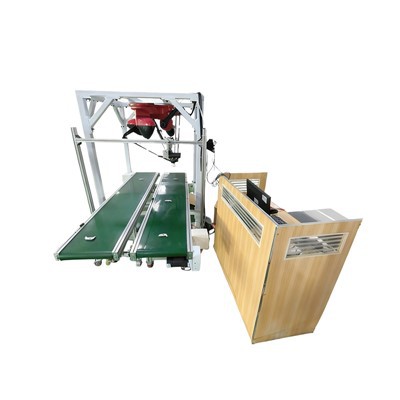
If you’d like to learn more about our rail-mounted welding robots and how their anti-dust design can work for your projects, we’d be happy to discuss your specific needs, show you performance data, and answer any questions you have.
Nail Gun Robot References
- International Union of Railways (UIC). (2021). Environmental Conditions for Railway Maintenance Equipment. UIC Publications.
- American Welding Society (AWS). (2019). Welding Robot Requirements for Outdoor Railway Applications. AWS D1.6 Document.
- National Institute for Occupational Safety and Health (NIOSH). (2020). Control of Metal Fume and Dust in Railway Welding Operations. NIOSH Publication.
- Industrial Robots Association (IRA). (2022). Design Standards for Dust-Resistant Industrial Robots. IRA Technical Report.
- Railway Track and Structures (RTS). (2021). Maintenance Equipment Reliability in Arid Track Environments. RTS Magazine, Vol. 117, No. 8.
Dongguan Chuanglida Intelligent Equipments Co., Ltd.
Address: Room 201, Building 2, No. 61, Shachang 1st Road, Dalang Town, Dongguan City, Guangdong Province
E-mail: haoguangli001@outlook.com
WebSite: https://www.boruntestech.com/
