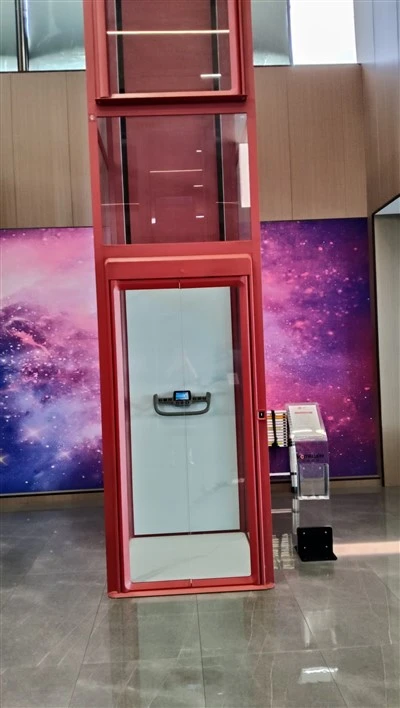
As a leading supplier of 270° full glass panoramic elevators, I field this question at least three times a week from architects, property managers, and building owners evaluating accessibility and safety for their projects—high-rise residential lobbies, boutique hotel atriums, and mixed-use commercial spaces alike. The short answer is yes, every one of our panoramic elevators is equipped with industry-mandated emergency communication devices, but the context matters, because the unique design of a curved, all-glass elevator doesn’t just fit generic safety specs—it shapes how those devices work, and why cutting corners here is a far bigger risk for a glass elevator than a traditional enclosed cabin. 270° Full Glass Panoramic Elevator
Let’s start with the basics, because there’s a lot of misinformation online about what “emergency communication” actually means for elevators. Most people think of an intercom that connects to a building’s security desk, but for 270° full glass elevators, two core factors change this: first, the all-glass exterior (a selling point for views) means the elevator is exposed to outdoor elements on most sides, so cell signal or radio frequency (RF) can be spotty depending on the building’s location—think a high-rise in a dense downtown core with concrete shielding, or a mountain resort where cellular service is unreliable. Second, panoramic elevators are often installed in spaces with a lot of foot traffic but no permanent ground-level staff on hand, unlike a standard elevator bank with a nearby security office. That’s why our emergency communication systems aren’t one-size-fits-all; they’re engineered specifically for the unique design of a full glass panoramic elevator, and they meet or exceed global safety standards: ASME A17.1 in the U.S., EN 81-20/50 in the EU, and Australia’s AS 1735, to name a few.
Let’s break down the two non-negotiable emergency communication devices we integrate into every 270° full glass panoramic elevator we sell, no exceptions. The first is the hardwired emergency intercom, the same mandated device required for all elevators, but modified for our glass cabins. Unlike generic intercoms that mount to a metal interior panel, our intercom is housed in a tamper-resistant, low-profile stainless steel bracket, recessed into the side of the glass cabin’s frame—so it doesn’t ruin the unobstructed view that makes our elevators a design focal point. The speaker and microphone are high-output, weather-sealed, and calibrated to cut through ambient noise from the building’s atrium, wind (for outdoor installations), or even the quiet hum of a sightseeing elevator in a resort. The intercom connects directly to two redundant control points: first, a 24/7 central monitoring station (required by code for elevators over 10 stories), and second, a secondary local intercom at the building’s ground or lobby level that works even if the main monitoring line goes down. For our international clients, we also integrate a universal emergency override that connects directly to local emergency services if the building’s security line is unreachable—something standard intercoms don’t always offer for non-U.S. regions.
The second, and for our panoramic elevators more critical, device is a cellular backup signal booster paired with a dedicated emergency call app. I’ve seen too many installations where a property manager tried to cut costs by skipping a signal booster, assuming the building’s existing cell service would reach the elevator. But a 270° full glass cabin is a mostly transparent enclosure, which means RF signals (including cell signals) can bounce around inside or be blocked by surrounding concrete or metal structural elements. For example, a client in downtown Chicago installed our elevators in a 12-story residential building, and their existing cell service dropped to 1 bar inside the elevator when it was on the 8th floor—their generic intercom failed twice during a test, because the line cut out mid-troubleshoot. We resolved that by adding a signal booster that’s calibrated specifically for the empty glass cabin: it doesn’t require external antennas, instead using small, discreet sensors mounted along the top and bottom of the elevator cab that capture and amplify cellular frequencies without blocking the view. This isn’t a add-on—this is standard equipment for every panoramic elevator we ship, because we learned early on that a glass elevator’s most beloved feature can also create a safety gap if you don’t account for signal attenuation.
Now, let’s address the common myths that lead some people to question whether 270° full glass elevators are as safe as traditional models. First, some building owners ask if an emergency call button is visible to passersby, since the glass is transparent. The short answer: our emergency communication devices are always located inside the elevator cabin, not on the exterior glass, per code requirements. Passersby might see a small stainless steel frame near the elevator call button on each floor, but that’s just the intercom’s wall unit—its internal circuitry is shielded, so it doesn’t ruin the glass’s aesthetic or interfere with the elevator’s operation. Another myth: panoramic elevators are more likely to get stuck, so emergency devices would need to work harder. In reality, panoramic elevators have the same mechanical safety systems as standard elevators—overload sensors, automatic braking, and a redundant power supply—but because they’re often installed in more public, high-traffic areas (like a hotel’s main atrium), our emergency communication systems are tested quarterly during routine maintenance, same as all other components. We also include a free maintenance guide for clients, specifically tailored to panoramic elevators, that details how to test the emergency intercom and signal booster to ensure they’re working correctly; this is part of our service package, not an extra charge.
I want to be transparent, too: there is one scenario where a 270° full glass panoramic elevator might not have the backup communication a client needs, and that’s if they choose a low-quality, third-party elevator supplier that cuts corners on safety to lower costs. Last year, I worked with a property developer in Miami who had installed three cheap panoramic elevators from a foreign supplier, and they were having issues with emergency calls failing. The supplier had used generic intercoms and no signal boosters, because they said “glass doesn’t affect cell service”—a mistake that almost led to a safety incident when an elevator got stuck on the 11th floor during a hurricane, and the occupants couldn’t reach anyone for help. We retrofitted those elevators with our calibrated signal boosters and reinforced intercoms, but it cost the developer twice as much as installing them upfront. That’s why, as a supplier focused on panoramic elevators, I never skip on emergency communication devices—because the last thing anyone wants is a beautiful view, but a risky safety gap.
Another key point: accessibility. The Americans with Disabilities Act (ADA) and similar global accessibility codes require that emergency communication devices be easy to reach for people with mobility impairments, which is especially important in panoramic elevators that often carry tourists or people with visual impairments. Our intercom is mounted at 48 inches, the standard ADA-compliant height, and has large, raised tactile buttons, plus voice prompts that announce when the emergency line is connected—something we don’t cut corners on, because a panoramic elevator is often a first or last impression of a building for guests or residents. We also offer closed-captioning for the intercom for hearing-impaired users, which is a voluntary add-on for traditional elevators but standard for our panoramic models, since many of our clients are in tourist-heavy areas with diverse visitor populations.
Let’s talk about recent updates to global safety standards, too, because emergency communication technology has improved a lot in the last five years. In 2021, ASME updated its A17.1 code to require that all elevators (including panoramic) have a secondary emergency communication path, beyond a wired intercom, to account for building-wide power outages or line failures. That’s why we now integrate a small, rechargeable backup battery for every emergency intercom—so even if the building’s main power is out, the intercom works for up to 72 hours, and the signal booster keeps working as long as the battery has charge. For our international clients, we’ve also adopted the EU’s new EN 81-28 standard, which requires emergency communication devices to have a “no-answer” alert that notifies the building’s security team automatically if a call isn’t answered within 10 minutes—another feature tailored to panoramic elevators, which are often in areas with no on-site security 24/7.
I know choosing a panoramic elevator is about more than just safety— it’s about creating a focal point for a building, giving residents or guests a view of the city or atrium that makes the space feel special. But safety can’t be an afterthought, especially when it comes to emergency communication. When a client works with us, we start by walking through their project’s specific needs: is this elevator going in a high-rise with spotty cell service, or a small boutique hotel with a dedicated security team? Do they need accessibility features for people with disabilities? How many stories tall is the elevator? We tailor the emergency communication system to their space, not just plug in a generic model that might work for a traditional elevator but falls short for a 270° full glass design.
To wrap this up, the short answer is a resounding yes: every 270° full glass panoramic elevator from our company comes with fully compliant, purpose-built emergency communication devices that meet all global safety standards. But beyond compliance, we’ve learned from years of working with clients that these devices aren’t just a code requirement—they’re a critical part of making a panoramic elevator that’s both beautiful and safe. Cutting corners here isn’t worth it, because the view might be stunning, but a building’s safety record is what builds trust with owners, residents, and visitors.

If you’re planning a project that includes a 270° full glass panoramic elevator and want to learn more about our emergency communication systems, or discuss custom solutions for your space, reach out to our team for a consultation. We can walk you through our installation process, share case studies from projects across North America, Europe, and Asia, and answer any questions you have about safety features specific to panoramic elevators. Don’t settle for a generic elevator safety package—work with a supplier who understands the unique needs of glass panoramic designs, and that starts with prioritizing reliable emergency communication every step of the way.
Four-corner Arc Sightseeing Elevator References
- ASME A17.1/CSA B44-2023, Safety Code for Elevators and Escalators, American Society of Mechanical Engineers
- EN 81-20:2020, Safety rules for the construction and installation of lifts – Lifts for passengers and goods – Part 20: Passenger lifts, European Committee for Standardization
- AS 1735.1:2020, Lifts, escalators and moving walks – Part 1: Passenger and goods lifts, Standards Australia
- International Association of Elevator Contractors (IAEC), Panoramic Elevator Safety Best Practices, 2022
- Federal Communications Commission (FCC), Emergency Communication Requirements for Elevators, 2021
Zhejiang Homeway Elevator Co., Ltd.
Zhejiang Homeway Elevator Co., Ltd. is one of the most professional 270° full glass panoramic elevator manufacturers and suppliers in China. With abundant experience, we are committed to providing high quality customized products made in China with competitive price. If you’re going to buy CE approved 270° full glass panoramic elevator, welcome to get quotation from our factory.
Address: No.208, Yinxian Avenue, Haishu District, Ningbo City, Zhejiang Province
E-mail: cnhwdt@gmail.com
WebSite: https://www.homewayelevator.com/
