As a supplier of AC servo motors, I’ve had the privilege of witnessing firsthand the transformative impact these remarkable machines have on numerous industries. One of the most frequently asked questions I encounter is: "What is the efficiency of an AC servo motor?" In this blog post, I aim to delve deep into this topic, shedding light on the factors that influence AC servo motor efficiency, how it is measured, and why it matters. AC Servo Motor
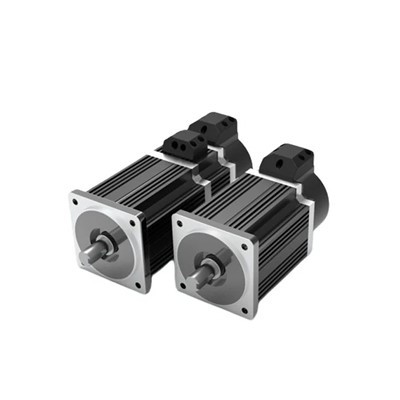
Understanding AC Servo Motor Basics
Before we dive into efficiency, let’s briefly recap what an AC servo motor is. An AC servo motor is a type of electric motor that uses alternating current (AC) to generate motion. It is a key component in many automated systems, providing precise control over speed, position, and torque. These motors are commonly used in robotics, CNC machines, industrial automation, and aerospace applications due to their high performance and reliability.
The operation of an AC servo motor is based on the principle of electromagnetic induction. When an alternating current is applied to the stator windings, it creates a rotating magnetic field. This magnetic field interacts with the magnetic field of the rotor, causing the rotor to rotate. The speed and direction of the rotor can be precisely controlled by adjusting the frequency and phase of the AC current.
What is Motor Efficiency?
Motor efficiency is defined as the ratio of mechanical power output to electrical power input, expressed as a percentage. In other words, it measures how effectively a motor converts electrical energy into mechanical energy. A higher efficiency motor wastes less energy in the form of heat, making it more cost-effective and environmentally friendly.
The formula for calculating motor efficiency (η) is as follows:
η = (P_out / P_in) × 100%
Where:
- η is the efficiency of the motor in percentage.
- P_out is the mechanical power output of the motor, usually measured in watts (W).
- P_in is the electrical power input to the motor, also measured in watts (W).
Factors Affecting AC Servo Motor Efficiency
Several factors can influence the efficiency of an AC servo motor. Understanding these factors is crucial for optimizing motor performance and selecting the right motor for your application.
Motor Design
The design of the motor plays a significant role in its efficiency. Factors such as the type of magnetic materials used, the winding configuration, and the size of the motor can all impact its efficiency. For example, motors with high-quality magnetic materials, such as neodymium magnets, tend to have higher efficiency because they can generate stronger magnetic fields with less energy.
Load Characteristics
The load characteristics, including the torque and speed requirements, also affect motor efficiency. An AC servo motor operates most efficiently at its rated load. If the motor is under-loaded or over-loaded, its efficiency will decrease. For instance, if a motor is designed to operate at a certain torque and speed but is subjected to a much lower load, it will consume more energy than necessary, reducing its efficiency.
Control Strategy
The control strategy used to operate the AC servo motor can have a significant impact on its efficiency. Advanced control algorithms, such as field-oriented control (FOC), can optimize the motor’s performance by adjusting the current and voltage in real-time to match the load requirements. This not only improves efficiency but also enhances the motor’s dynamic response and torque control.
Environmental Conditions
The environmental conditions in which the motor operates can also affect its efficiency. High temperatures, humidity, and dust can all increase the motor’s internal resistance, causing it to consume more energy and generate more heat. Additionally, vibrations and mechanical stress can also impact the motor’s performance and efficiency.
Measuring AC Servo Motor Efficiency
Measuring the efficiency of an AC servo motor requires specialized equipment and techniques. The most common method is to measure the electrical power input and the mechanical power output of the motor.
Electrical Power Input
The electrical power input to the motor can be measured using a power analyzer. This device measures the voltage, current, and power factor of the motor, allowing you to calculate the electrical power input.
Mechanical Power Output
The mechanical power output of the motor can be measured using a dynamometer. A dynamometer is a device that applies a load to the motor and measures the torque and speed of the motor. By multiplying the torque and speed, you can calculate the mechanical power output of the motor.
Efficiency Calculation
Once the electrical power input and mechanical power output have been measured, the efficiency of the motor can be calculated using the formula mentioned earlier.
Why Does Efficiency Matter?
Efficiency is a critical factor in the selection and operation of AC servo motors for several reasons.
Energy Savings
A more efficient motor consumes less electrical energy, resulting in lower energy costs. Over the long term, these energy savings can add up significantly, especially for applications that require continuous motor operation.
Environmental Impact
By reducing energy consumption, efficient motors also help to minimize the environmental impact. Lower energy consumption means less greenhouse gas emissions and a smaller carbon footprint.
Performance and Reliability
Efficient motors tend to generate less heat, which can improve their performance and reliability. Excessive heat can cause the motor’s insulation to degrade, leading to premature motor failure. By operating at a lower temperature, efficient motors have a longer lifespan and require less maintenance.
Selecting an Efficient AC Servo Motor
When selecting an AC servo motor, it’s important to consider several factors to ensure you choose a motor that meets your efficiency requirements.
Efficiency Ratings
Look for motors with high efficiency ratings. Many motor manufacturers provide efficiency data for their motors, which can help you compare different models and select the most efficient one.
Application Requirements
Consider the specific requirements of your application, such as the load characteristics, speed range, and duty cycle. Choose a motor that is sized appropriately for your application to ensure it operates at its optimal efficiency.
Control System
Select a motor that is compatible with an advanced control system. Advanced control algorithms can optimize the motor’s performance and efficiency, especially in applications with variable loads.
Conclusion
In conclusion, the efficiency of an AC servo motor is a crucial factor that can significantly impact the performance, cost, and environmental impact of your application. By understanding the factors that affect motor efficiency, how it is measured, and why it matters, you can make informed decisions when selecting and operating AC servo motors.

As a supplier of AC servo motors, we are committed to providing our customers with high-quality, efficient motors that meet their specific needs. Our team of experts is always available to assist you in selecting the right motor for your application and to provide technical support and advice.
DC Motor If you are interested in learning more about our AC servo motors or would like to discuss your specific requirements, please don’t hesitate to contact us. We look forward to the opportunity to work with you and help you achieve your goals.
References
- Chapman, S. J. (2012). Electric Machinery Fundamentals. McGraw-Hill Education.
- Krause, P. C., Wasynczuk, O., & Sudhoff, S. D. (2013). Analysis of Electric Machinery and Drive Systems. John Wiley & Sons.
- Nasar, S. A., & Boldea, I. (2001). Electric Motor Drives: Modeling, Analysis, and Control. CRC Press.
Zibo Auric Mechanical and Electrical Technology Co., Ltd.
As one of the leading ac servo motor manufacturers and suppliers in China, we warmly welcome you to buy advanced ac servo motor for sale here from our factory. All customized motors are with high quality and competitive price.
Address: B419, High-tech Entrepreneurship Park, High-tech Zone, Zibo City
E-mail: cui@auricmotor.com
WebSite: https://www.auricmotor.com/
