If you’ve ever stood inside a pharmaceutical cleanroom or a microchip fabrication facility, you know how wild it is—every movement is calculated, the air feels crisp enough to taste, and even a single speck of dust can ruin an entire production batch. That’s where cobots come in, and no, I’m not talking about the clunky industrial robots of the 90s that needed a 10-foot safety cage to survive. I’m on the ground at our cobot supply company, talking to cleanroom techs every single day, and I can tell you—these aren’t your dad’s robots. They’re designed to fit into spaces where cleanroom rules aren’t just guidelines—they’re non-negotiable. Cobot
First off, let’s cut through the jargon people love to throw around. A cleanroom isn’t just a “super clean factory”; it’s an environment with strict controls on particulate matter, temperature, humidity, and even air pressure. For most Class 100 (or ISO 5) cleanrooms, you can’t have more than 100 particles larger than 0.5 microns per cubic foot. A single strand of human hair is about 50 microns, so we’re talking tiny, tiny stuff. Traditional robots are built for factory floors with grease, dust, and heavy loads—they’d leak lubricants, shed metal shavings, and require tool changes that kick up particles. Cobots? They’re built from the ground up to avoid all that.
Let’s start with materials. The parts we use for our cleanroom cobots aren’t your standard aluminum alloy that scratches or sheds bits when it rubs together. We use things like anodized aluminum that’s been polished so smooth there’s nowhere for particles to hide. For joints and moving parts, we don’t use generic grease—we use food-grade, vacuum-compatible lubricants that won’t outgas. Outgassing is a big deal; those tiny vapors from cheap lubricants can condense on sensitive microchips or pharmaceutical surfaces, ruining batches faster than you can say “contamination event.” We also skip any exposed wiring that can snag or shed insulation—everything’s sealed inside cable carriers that run along the arm, so there’s no loose plastic flapping around.
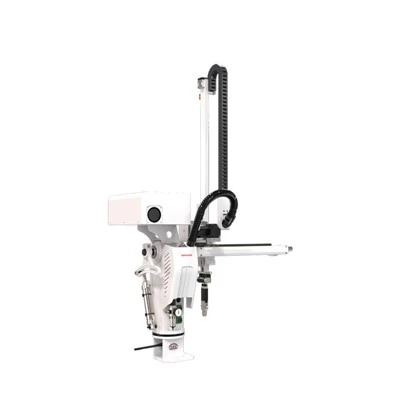
Next, the design of the arm itself. Industrial robots have big, bulky joints with gaps where dust can get in and lubricant can leak out. Our cobots have rounded edges and sealed joints that are easy to wipe down. Cleanroom techs don’t have time to disassemble a robot every shift to clean it—they need to grab a pre-approved wipe, spray a little 70% isopropyl alcohol (the go-to for most cleanrooms), and be done in 30 seconds. We built our cobots so there are no crevices that trap crud; every surface is smooth and sloped, so any spilled material or loose particles get wiped away, not stuck.
Then there’s the control system. A lot of people don’t realize that the software running a cobot in a cleanroom is just as important as the hardware. Traditional robots need external safety cages, which create dead spots where particles can collect, and they run on very fast, jerky movements—movements that can stir up air and send particles flying. Cobots, on the other hand, are collaborative by nature, but in a cleanroom, that means slow, controlled, predictable movements. We program our cobots to move at speeds that don’t disrupt the laminar air flow—those ceiling-mounted filters that push air in straight, even streams. If a cobot moves too fast, it creates turbulence, like a plane taking off in a small room, which kicks up all the particles that the laminar flow is supposed to keep away from the work surface. Our software even has built-in sensors that adjust speed if it detects unexpected movement—like a tech leaning in too close, which keeps the air calm and the particles where they belong.
Now, what do these cobots actually do in a cleanroom? Let’s be real—no cleanroom is the same. Some make vaccines, some make microchips, some make medical devices like pacemaker parts. We’ve had clients use our cobots for everything from vial filling to pick-and-place of tiny silicon wafers. For vial filling, precision is everything—you can’t overfill a vaccine vial and you can’t spill a drop, because spilled liquid is a huge contaminant. Our cobots have position repeatability down to a tenth of a millimeter, so every vial gets exactly the right amount, every time. No human error, no spilled fluid, no chance of cross-contamination between batches.
For microchip manufacturing, wafers are so thin and fragile that even a tiny scratch can ruin a $1,000 wafer. Human hands leave oil and dust, so they can’t touch them—hence the cobot. We’ve worked with semiconductor clients who use our cobots to pick up wafers from a storage cassette, move them to an etching machine, and place them back, all without touching the surface. The cobot’s grippers are made of soft, non-marking silicone, and they have force sensors that can tell if they’re holding the wafer too tight or too loose. If the gripper even senses a tiny vibration that could scratch the wafer, it stops moving immediately. That’s the kind of precision you can’t get from a human—even the most careful techs get fatigued after 8 hours, and fatigue leads to mistakes.
Wait, but what about regular cleaning? Cleanrooms require daily, weekly, monthly decontamination, sometimes with hydrogen peroxide vapor (HPV) to kill any microbes. Our cobots are built to handle that. We test every single model to make sure they won’t corrode when exposed to HPV or isopropyl alcohol, which is a big problem for cheaper cobots that use plastic parts. Some plastic parts will swell or crack after a few rounds of decontamination, which leads to particles being shed. We use only polymers rated for cleanroom use, so our cobots can go through decontamination cycles year after year without breaking a sweat.
I get it—you might be thinking, “Why not just use a traditional robot in a cleanroom?” Let’s do the math. A traditional cleanroom robot costs 2-3 times more than a cobot, it takes weeks to install and program, and it requires a dedicated technician to maintain it. Cobots? You can unbox one in an hour, program it to do a new task in a day, and move it to a different cleanroom (or even a different part of the same cleanroom) in 10 minutes. That’s a game-changer for small to medium-sized cleanrooms that don’t have huge maintenance teams or big budgets. We had a client who runs a specialty vaccine lab—they only make 10,000 doses a month, not millions. Before our cobot, they had to have two techs working 12-hour shifts just to fill vials. Now, one tech programs the cobot in the morning, and it runs all day, with a quick check every hour. They cut their labor costs by 60% and reduced batch contamination to zero in 6 months.
Of course, it’s not all smooth sailing. We run into problems sometimes—like when a client wants to use our cobot for a task it’s not quite built for, or when they skip a step in preparing the environment. For example, we had a client that tried to put our cobot in a Class 10 (ISO 4) cleanroom, which is super strict—less than 10 particles larger than 0.5 microns per cubic foot. Our cobot is rated for Class 100, and while it works fine in a Class 10, they had to add a few extra filters to the air supply around the cobot to get the particle count that low. That’s why we work with every client one-on-one—we don’t just sell them a cobot and walk away. We send our engineers out to the site to assess the space, talk to the techs, and make sure the cobot is set up correctly.
Another thing people don’t talk about: noise. Cleanrooms are supposed to be quiet, because noise can make techs make mistakes. Traditional robots are loud—like, 80 decibels loud, which is as loud as a lawnmower. Our cobots run at 50 decibels, which is like a normal conversation. That might sound small, but in a space where everyone is wearing masks and goggles, it makes a huge difference for morale and focus.
So, if you’re running a cleanroom and you’re tired of fighting contamination, dealing with fatigued staff, or spending a fortune on maintenance, cobots might be the solution you’re looking for. The key is finding a supplier that understands cleanrooms, not just robots. At our company, we don’t sell off-the-shelf cobots and call it a day. We build our cobots specifically for cleanroom use, we test every part to make sure it meets ISO standards, and we work with you long after installation to make sure it’s doing exactly what you need it to do.
If you’re curious to learn more about how our cobots can fit into your cleanroom, just reach out to our team for a procurement consultation. We can walk you through our models, share client case studies, and answer any questions you have about cleanroom compatibility, programming, or maintenance. No sales pitch, no jargon, just straight talk about how to make your cleanroom run smoother, faster, and with fewer mistakes.
Welding Robot References
ISO 14644-1: Cleanrooms and associated controlled environments — Part 1: Classification of air cleanliness by particle concentration
Semiconductor Manufacturing International Corporation (SMIC) Cleanroom Equipment Guidelines
International Society for Pharmaceutical Engineering (ISPE) Cleanroom Design and Operation Guidelines
ASTM F2100: Standard Specification for Performance of Materials Used in Cleanrooms and Other Controlled Environments
Robotic Technology (GD) Co., Ltd.
Robotic Technology (GD) Co., Ltd. is one of the most experienced cobot manufacturers and suppliers in China, also supports custom service and one year warranty. Please feel free to wholesale CE approved cobot for sale here from our factory. Contact us for quotation.
Address: Room 102, No. 30,Hengfeng 2nd Road,Daguo, Changping Town, Dongguan City,Guangdong,China
E-mail: admin@iroboticplus.com
WebSite: https://www.rb-tic.com/
