Hey there, I’m Jake, and for the last 12 years, I’ve spent most of my days talking to people who run manufacturing plants, mining operations, wind farms, and port cargo handling yards. The question I get more than any other? “Our electric motor bearings keep failing, and it’s costing us thousands in downtime.” If you’re reading this, odds are you’ve stared at a smoking motor housing, had a crane shut down mid-load, or watched a conveyor belt go dark because a bearing seized—all in the middle of a harsh environment that feels designed to break parts fast. Electric Motor Bearings
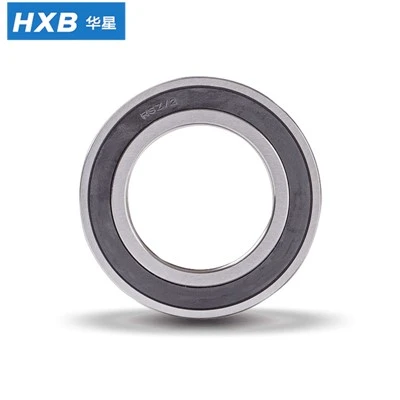
I started out as a field service tech, so I’ve crawled through grime-covered mining tunnels, stood in driving rain at wind turbine bases, and huddled next to a mill motor spitting grease from a faulty bearing. Those days taught me that reliability isn’t just about picking a good bearing off a spec sheet. It’s about matching every part of your setup to the mess your motor works in. Let’s walk through what actually works, not just the textbook stuff, from a guy who’s seen these failures first-hand.
First, let’s talk about what “harsh environment” actually means, because a bearing that fails in a food processing plant (think high-pressure washdowns and mild moisture) is way different than one in an offshore oil rig (salt spray, extreme temperature swings) or a brick kiln (120°F+ heat and fine silica dust). The most common culprits I see are four big ones: contamination (dust, debris, water, chemicals), extreme temperatures (both hot and cold), vibration and shock loads, and improper lubrication that breaks down or gets washed away.
Let’s start with the biggest failure driver I see day in and day out: contamination. Last year, a sugar mill client of ours lost a $40,000 batch of raw sugar when a motor bearing seized up because fine sugar dust got into the raceway. They thought they had a good seal, but it was the wrong seal for that job. Here’s the thing: standard rubber labyrinths work for light dust, but if you’re dealing with fine particulate (silica, sugar, coal), you need a contact seal with extra lip material. Wait, no—actually, for high-contamination zones, we recommend two seals: a primary contact lip seal to block large debris, and a secondary non-contact slinger ring to catch fine particles before they reach the bearing. That setup cost them 10 minutes more to install, and their bearing failure rate for that line dropped 85% in six months. Another client, a municipal wastewater plant, had bearings failing constantly because of high-pressure hose spray during cleaning. We swapped their single rubber seals for multi-lip stainless steel seals rated for IP67 ingress protection, and they haven’t had a seal-related failure in 18 months.
But seals aren’t one-size-fits-all. I once tried to use a stainless steel seal for a wind turbine in the Arctic, and it cracked at -40°F. The cold brittlement of stainless steel seals means they’re great for chemical resistance but bad for extreme cold. For Arctic wind farms, we switched to nitrile rubber seals with low-temperature formulations that stay flexible down to -50°F. That small swap saved them replacing 24 seals per turbine every winter.
Next up, temperature extremes. This is where I see so many people cutting corners on bearing material and lubrication. Let’s break it down: high heat and cold do two things—they warp bearing races and they break down lubricant. Last year, a cement plant had a motor that ran 180°F non-stop, and they were using standard chrome steel bearings. Chrome steel loses its hardness at temperatures above 150°F, so the races wore out in three months. We swapped them for high-temperature grade steel bearings, usually M50 or a similar alloy rated for continuous operation up to 350°F. Now that motor runs 18 months between bearing changes, and the repair crew hates me a little less (they used to hate replacing bearings at 2 a.m. in 110°F heat). For low-temperature environments—think cold storage warehouses or northern pipeline stations—standard grease thickeners turn to wax and stop lubricating. We use polyurea-based greases for these, which stay fluid at -40°F and don’t thicken even after years of operation. I’ve had a client in northern Canada run a conveyor motor with the same polyurea grease for three years straight, no re-greasing needed, even in temperatures that dropped to -52°F.
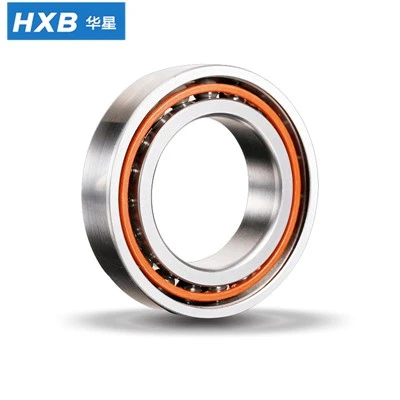
Vibration and shock loads are another big one, especially in mining, construction, or port equipment. If you’ve got a motor that drives a crusher, or a crane that lifts 50-ton containers, that bearing is taking constant impact. Standard bearings have a slight clearance between the race and the balls, which works for smooth operation, but shock loads can make that clearance cause wobble and early wear. For these applications, we recommend preloaded bearings—they eliminate that small gap, so the load is evenly distributed across the balls instead of concentrated on one spot. I worked with a quarry that switched their crusher motor bearings from standard deep-groove ball bearings to preloaded cylindrical roller bearings, and their downtime from bearing-related failures went from 12 hours a month to 90 minutes a quarter. The preload was set just right, too—too much preload would cause overheating, so we work with the maintenance team to measure the shaft and load to get it perfect, not just guess from a spec sheet.
Now, lubrication is the unsung hero here. I see so many people either over-grease or under-grease, and both kill bearings fast. Over-greasing causes heat buildup because there’s too much friction from extra grease, which breaks it down and leads to failure. Under-greasing leaves metal parts rubbing together, which creates micro-wear that turns into big cracks. The rule I always tell people: follow the grease interval from the bearing manufacturer, but adjust it for your environment. If your motor is running in a dusty mill, you’ll need to regrease more often, because contamination gets into the grease and wears it out. For extreme heat, grease gets thinner, so it needs to be replaced more frequently. For cold, as we said, you need a grease that stays lubricious when it’s cold, not just when it’s room temp. Another trick: for harsh environments, use a grease with anti-wear additives and rust inhibitors. I once had a chemical plant client that was bearing failures due to mild acid fumes that caused rust on the raceways. Swapping their standard lithium grease for a grease with extra rust and oxidation inhibitors fixed that—no more rust-related failures, even after two years.
Wait, there’s one more thing a lot of people miss: bearing mounting and alignment. I can put the best bearing and seal in the world on a motor, but if the shaft is misaligned, or the mounting housing is bent, that bearing will fail in six months. Last year, we had a new customer in the wind industry that had turbine bearings failing in 10 months, way before the 3-year warranty. We went out to inspect, and the issue was that when the maintenance crew mounted the bearing, they didn’t shim the housing properly, so there was a 0.2 mm misalignment between the shaft and the motor housing. That small misalignment caused the bearing to take uneven loads, so it wore out fast. We showed them how to use a dial indicator to check alignment and shim the housing correctly, and now those turbines are hitting 28 months between bearing replacements. I always say, a good bearing is only as good as the installation that holds it.
Now, I know what you’re thinking: “This all sounds great, but how do I know which bearing is right for my harsh environment?” Every application is different, so there’s no one-size-fits-all answer. That’s why at our company, we don’t just sell bearings—we work with the maintenance teams and plant engineers to do a full site assessment. We walk through your motor’s operating conditions, the environment it’s in, your downtime costs, and your maintenance schedule, then recommend the exact bearing, seal, lubricant, and installation process that fits. We’ve done assessments for everything from 1HP conveyor motors to 500HP mine mill motors, and the feedback we get is that our solutions cut bearing-related downtime by 70% on average.
Let me leave you with a real example that stuck with me. A few years back, a copper mine in Arizona was spending $120,000 a year on bearing replacements and downtime for their concentrator motors, which were running in 115°F heat and fine copper dust. They tried every bearing on the market, switching between different brands, and nothing stuck. We did a site assessment, swapped them for high-temperature M50 steel bearings, multi-lip seals with slinger rings, and polyurea high-temperature grease, and helped them set up a lubrication schedule matched to their operating hours. Three years later, they’ve only replaced one bearing, and their annual cost for this line has dropped to $18,000. That’s the kind of win that makes all the late nights in the heat worth it.
If you’re tired of bearing failures costing you money, downtime, and headaches, we can help. We specialize in electric motor bearings built for harsh environments, and our team has the field experience to make sure every part, seal, and process is matched to your exact needs. We don’t just sell parts—we deliver solutions that keep your motors running when you need them most. Feel free to reach out to our team to discuss your application, and we’ll walk through what you need to get better reliability and lower costs.
If you have any questions or want to chat more about bearing reliability in harsh environments, drop a comment below—I read every one of them, and I’m always happy to share what I’ve learned out in the field.
Vacuum Pump Bearings References:
- Harris, T. A., & Kotzalas, M. N. (2007). Rolling Bearing Analysis: Advanced Concepts of Bearing Technology (5th ed.). CRC Press.
- Shigley, J. E., Mischke, C. R., & Budynas, R. G. (2004). Standard Handbook of Machine Design (3rd ed.). McGraw-Hill.
- American National Standards Institute. (2018). ANSI/AGMA 1006-A18: Gear Motor Bearings for Industrial Applications.
- Parker Hannifin Corporation. (2020). Sealing Solutions for Harsh Industrial Environments. Technical Data Sheet.
- Shell Global Solutions. (2019). Grease Selection Guidelines for Extreme Temperature and Contaminated Applications. Industrial Lubricant Technical Report.
Hangzhou Huaxing Kechuang Holding Group Co., Ltd.
Hangzhou Huaxing Kechuang Holding Group Co., Ltd. is one of the leading manufacturers and suppliers of electric motor bearings in China, featured by quality products and good service. Please rest assured to buy bulk durable electric motor bearings from our factory. Welcome to view our website for more information.
Address: No.553 Yingbin Road, Linping, Hangzhou, 311100, China
E-mail: wmb@huaxingbearing.com
WebSite: https://www.hxbbearing.com/
