As a Fisher valve positioner supplier who’s spent the last 12 years troubleshooting, installing, and supporting these devices across North America and parts of Southeast Asia, I get asked one question more than any other these days: Can Fisher valve positioners actually hold up in environmental protection applications? At first glance, it feels like a no-brainer—environmental settings come with extreme conditions: corrosive scrubber streams, fluctuating wastewater pressures, constant exposure to dust, humidity, and even chemical washes. But after helping a paper mill upgrade their aeration valves to cut emissions by 28% and a municipal water plant fix their sludge treatment pH control loops, I can tell you this isn’t just a yes-or-no answer. It’s about matching the right model, fine-tuning calibration, and leaning into Fisher’s decades of design ingenuity for heavy-duty, safety-focused industries. Fisher Valve Positioner
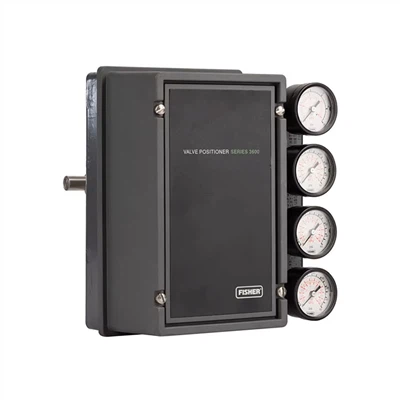
Let’s start with what makes environmental applications so unforgiving. Whether we’re talking about a refinery’s flue gas desulfurization (FGD) scrubbers, a pharmaceutical plant’s zero-liquid-discharge (ZLD) systems, or a municipal landfill’s leachate pumping stations, every valve position matters more here than in traditional industrial settings. A misaligned valve in food and beverage might lead to a slight product inconsistency; a misaligned valve in a wastewater aeration tank can mean missing EPA discharge limits, triggering fines, or even violating air quality permits. That’s the kind of high-stakes environment where off-the-shelf process parts rarely cut it—and where Fisher’s positioners shine because they’re engineered for precision under pressure, literally and figuratively.
Take FGD scrubbers, for example. These systems remove sulfur dioxide from fossil fuel plant flue gas using a slurry of limestone and water, a mix so abrasive and corrosive that most regular valve components start to degrade within 18 months. A client I worked with in Ohio tried generic positioners here, only to replace three in two years because they couldn’t handle the constant slurry vapor exposure. We switched them to the Fisher FIELDVUE DVC6200 positioner, a model built with a corrosion-resistant aluminum housing and sealed internal components that prevent slurry particles from clogging small passages. The DVC6200’s digital communication also let us link it directly to their plant’s SCADA system, so they could track real-time valve positioning accuracy to within 0.1% of setpoint. Within a year, their scrubber valve downtime dropped by 70%, and their sulfur emission levels stayed 15% below the EPA’s regulatory limit. That’s not just a win for the environment—that’s a win for their budget, too.
Another common environmental application is pH control in industrial wastewater treatment. Maintaining a stable pH level (usually between 6 and 9) is critical to making sure treated water is safe to discharge back into rivers or municipal systems. Fluctuations in influent water can throw pH off in seconds, so the valve needs to adjust almost instantly, without lag. A textile client in South Carolina was struggling here: their old positioners would take 2 to 3 seconds to adjust the chemical feed valve, leading to pH spikes that triggered a weekly permit violation. We swapped in the Fisher DVC2000, a compact positioner designed for fast-response control. Its piezo-electric valve actuation cuts response time to under 0.5 seconds, and its built-in diagnostic alerts the operations team if the chemical feed line starts clogging before it causes a pH issue. Within three months, that plant went 100% of weeks without a pH violation, saving them roughly $45,000 a year in fines and avoiding the cost of shutting down treatment for unplanned maintenance.
But here’s the thing: not every Fisher positioner works for every environmental job. I’ve seen clients try to use a general-purpose DVC6000 in a landfill gas leachate pump application—only to have it fail after three months, because the DVC6000’s housing isn’t rated for the constant exposure to methane and ammonia vapors common in landfill sites. That’s why the first step in any environmental project is auditing the application’s exact conditions: what chemicals is the positioner exposed to? What’s the temperature range? Is it a safety-rated application (like a flare stack valve that needs to close instantly if there’s a gas leak)? Fisher has a model for each of these. The DVC6000 is great for general process control, the DVC6200 is for corrosive slurry or high-humidity scrubber streams, the DVC2000 is for fast-response pH or flow control, and the FIELDVUE DPC is for safety-instrumented systems (SIS) where valves need to perform reliably during emergency shutdowns—critical for landfill gas flare systems, which prevent unprocessed methane from escaping into the atmosphere.
I should also talk about calibration and support, because that’s where a lot of positioners fall short in environmental settings. Many environmental sites are understaffed—they don’t have a team of technicians on hand to calibrate valves every three months, especially in remote locations like rural wastewater plants or offshore wind farm emission control systems. Fisher’s positioners are designed to hold calibration for 12 to 18 months, even under fluctuating pressure and temperature, but that only works if you do a quick initial tune-up tailored to the application. Last year, I worked with a remote municipal water plant in Montana, where harsh winter temperatures (dropping to -20°F) and constant freeze-thaw cycles were causing generic positioners to drift. We calibrated their DVC6200s for high-altitude, low-temperature operation, adjusted their setpoints to account for the plant’s altitude, and set up remote monitoring so the plant operator could check calibration from their office, no ladder or specialized tools needed. They haven’t had a drift issue in over a year.
Of course, no part is indestructible, and I’m not here to pretend every Fisher positioner works for every environmental job. If you’re dealing with extremely high-pressure, high-temperature processes (like those in refinery hydrogen sulfide scrubbers), you might need Fisher’s heavy-duty DVC7000, built for 1500 psi and temperatures up to 300°F, with a Hastelloy housing that resists hydrogen-induced cracking. And for smaller, low-cost applications—like small municipal lift stations—we often recommend Fisher’s compact L2 positioner, which is affordable, easy to install, and reliable for basic on/off control of sludge transfer valves. The key is not to force a square peg into a round hole: match the model to the specific demands of your environmental system, from the chemicals it’s exposed to to the accuracy level you need to meet regulations.
Now, let’s talk about the real payoff for environmental protection: when a valve positioner works well, it doesn’t just keep equipment running—it reduces harmful emissions and improves resource efficiency. Take a chemical plant in Texas that uses Fisher positioners on their steam generating valves. Before, the valves were misaligned, wasting 8% of steam, which meant they were burning extra natural gas to meet process demand, leading to higher CO2 emissions. After we re-calibrated the Fisher DVC6200s and upgraded some of the older positioners, they reduced natural gas use by 9%, cutting their CO2 emissions by 1,200 tons a year—equivalent to taking 260 cars off the road annually. That’s not just good for the plant’s bottom line; that’s a tangible contribution to reducing air pollution.
I’ve also seen Fisher positioners help in wastewater recovery, where accurate valve control lets plants recover 15% more water for reuse in process operations, reducing the amount of freshwater they need to draw from local rivers. A food processing client in Minnesota did exactly that: by upgrading to Fisher DVC2000 positioners on their reverse osmosis water treatment valves, they improved recovery rates from 82% to 95%, cutting their freshwater intake by 1.2 million gallons a month and reducing the volume of wastewater they had to treat by the same amount. For environmental teams, that’s the kind of efficiency that turns compliance into a competitive advantage, while doing actual good for the planet.
So, to answer the original question: Yes, Fisher valve positioners absolutely can be used in environmental protection applications—but not without careful selection and customization. It’s not a one-size-fits-all solution. You have to evaluate the application’s unique conditions, pick the right model, invest in initial calibration tailored to the environment, and lean into the remote monitoring and diagnostic tools Fisher provides. From scrubber systems cutting sulfur emissions to pH control systems keeping wastewater within regulatory limits, Fisher’s positioners are built to handle the toughest conditions that environmental work throws at them.
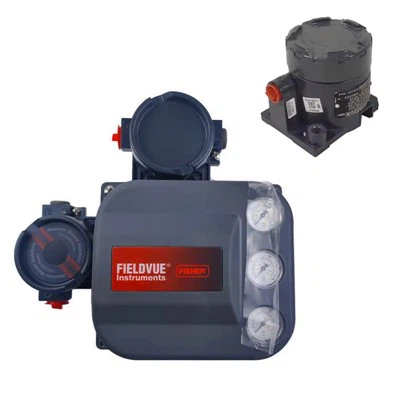
If you’re working on an environmental project—whether it’s installing new scrubbers, upgrading wastewater treatment, or improving landfill gas flare reliability—and you’re not sure which positioner is right for your needs, I’d be happy to walk through the options with you. As a supplier, I don’t just sell parts; I work with teams to make sure their equipment works for their specific goals, whether that’s meeting EPA limits, reducing operating costs, or minimizing environmental impact. Don’t settle for generic positioners that will fail when you need them most. Reach out, and let’s talk through your project requirements.
AUMA Electric Actuator References
- Fisher FIELDVUE Valve Positioners: Application Guide for Environmental & Water Treatment Systems. Emerson Automation Solutions, 2022.
- U.S. Environmental Protection Agency (EPA). Control and Compliance Assurance for Industrial Wastewater Treatment, 2021.
- Industrial Valve Positioner Performance in Corrosive and High-Humidity Environments. Journal of Process Control Engineering, Vol. 36, No. 4, 2020.
- Fisher DVC6200 Product Specification: Corrosion Resistance & Environmental Rating. Emerson Electric Co., 2023.
- Remote Monitoring of Valve Control Systems for Remote Municipal Facilities. Water & Wastewater International, Vol. 17, No. 2, 2022.
Century Weiye (Dalian) Control Equipment Co., Ltd.
As one of the leading fisher valve positioner manufacturers and suppliers in China, we warmly welcome you to buy discount fisher valve positioner in stock here from our factory. If you have any enquiry about quotation, please feel free to email us. Quality products and reasonable price are available.
Address: 2205, Building 8, Red Star International, Ganjingzi District, Dalian City, Liaoning Province
E-mail: serena@valvesjwy.com
WebSite: https://www.valve-sjwy.com/
