Let me start by saying something that might surprise you: as someone who’s spent the last 12 years running a kids’ furniture supply company, I used to be the guy telling parents to go for the cheapest options. I’d sit in on tradeshow meetings, nod along when retailers pitched $50 toddler beds that looked like they’d collapse by the time a kid outgrew them, and even passed along those “great deals” to my own cousin when she had her first child. That all changed when my 7-year-old nephew tripped over a wobbly bookshelf made from particleboard last year. He’s fine, just a scrape on his knee, but that moment made me look at the question of high-end kids’ furniture differently—really look at it, not just as a product I sell, but as something that shapes how kids grow, how much parents stress, and how much money families waste in the long run. Today, I’m going to walk you through why investing in high-end kids’ furniture isn’t just a luxury, it’s a choice that pays off in ways you might not expect. Kid’s Furniture

First, let’s get one thing straight: “high-end” doesn’t mean expensive for expensive’s sake. I see this all the time—parents scrolling online, seeing a kids’ desk priced at $300 vs. a $100 one made from the same particleboard, and writing off the higher price as a scam. But when I say high-end, I’m talking about furniture built from solid, non-toxic materials, designed to adapt as a child grows, and tested to meet far stricter safety standards than the budget stuff. Let’s start with safety, because that’s the non-negotiable for any parent. The Consumer Product Safety Commission (CPSC) reported that in 2022 alone, there were over 12,000 emergency room visits related to children’s furniture accidents. Most of those were from tip-overs, broken parts, or exposure to harmful chemicals like formaldehyde. I’ll be honest here: budget furniture is almost always made from particleboard or MDF pressed with adhesives that leach formaldehyde over time. There’s research from the Environmental Working Group that found up to 70% of budget kids’ products tested had levels of formaldehyde above the safe limit for long-term exposure, which can lead to respiratory issues, especially in younger kids whose immune systems are still developing. High-end brands? We use solid pine, oak, or bamboo, and use water-based adhesives that emit zero volatile organic compounds (VOCs). A few years ago, we had a batch of bunk beds tested at a third-party lab, and they came back with formaldehyde levels so low, they were below the limit for adult bedroom furniture. That’s a big deal when you think about your kid breathing in that air 12 hours a day, every day.
Then there’s durability, which ties directly to value. A few months ago, I had a mom come into our showroom with her 5-year-old and her 2-year-old. She was comparing a budget toddler bed to our solid wood one. “I’ll just buy another bed when she outgrows this,” she said. I pulled her over to our display, where a 10-year-old version of the same bed was still standing, just a little scuffed at the base from years of moving. “Your 5-year-old will be in a toddler bed for at least 3 years, right? That’s 3 years of daily use—jumping on the bed, dragging toys under it, your younger kid climbing on it. A budget bed might last that long, but after that, it’ll break. You’ll be spending another $100 in 3 years, then another $100 when your next kid outgrows their bed. Our bed? You can convert it to a twin bed when she’s 8, then a full-size bed when she’s 14. That’s 11 years of use from one piece, instead of three budget pieces. That’s a lot less money over time, and way less hassle.” She bought the bed that day, and last week she emailed me a photo of her older daughter’s bed, now converted to a twin, with a note that her 2-year-old is already asking when she’ll get the same one. It’s not just beds, either. We’ve got desks that adjust height, so a 6-year-old doing homework can use it, then a 16-year-old filling out college apps, then even a young adult using it for a home office. Budget desks, on the other hand, are fixed height—by the time a kid is 10, they’re hunching over it, leading to posture issues that doctors tell me are more common now because of poorly sized furniture. A study from the American Chiropractic Association found that 60% of school-aged kids have mild to moderate posture problems linked to using desks that are too small for their height. High-end adjustable desks fix that, and that’s a health cost you don’t have to pay later.
I know what you’re thinking right now: “But I have a limited budget. Can’t I get a middle-ground option that’s not super expensive but better than the cheap stuff?” And that’s a fair question. I don’t want to push anyone into spending more than they can afford, but let’s talk about where you can cut corners and where you can’t. Cut corners on decor—wall decals, storage bins, throw pillows. Those are easy to replace when your kid’s tastes change. Don’t cut corners on the big-ticket items: beds, desks, and dressers. A dress is something your kid will use every day to put away clothes, store toys, and keep their space organized. A wobbly, thin particleboard dresser will tip over if your kid climbs on it—there’s no “almost” when it comes to that. The CPSC says 1 in 4 furniture tip-over injuries involve dressers, because kids love to pull on the handles, climb up to reach a toy, or open all the drawers at once. High-end dressers come with safety anchors pre-installed, designed to hold against a wall, and they’re heavy enough that they won’t tip over even if a 50-pound kid climbs the side. We test every single dresser we sell with a 100-pound pull on the top drawer, and none of them tip. I’ve seen budget dressers that tip when you pull out the third drawer. That’s not a minor flaw—that’s a safety risk that could have been avoided with a better build.
Another point that a lot of parents don’t consider: emotional value. Kids’ furniture isn’t just furniture. It’s where they have their first sleepovers, where they do their first homework project, where they hide their favorite toys, where they read books before bed. I have customers who tell me that their kids still talk about the bed they had when they were little, the one that had a little scratch on the side from when they tripped while getting up to get a glass of water. That bed was a constant in their childhood, something that stayed the same even as everything else changed—new schools, new toys, new routines. Budget furniture is so generic, so cheap that it feels disposable. You don’t have that moment of looking at a piece and thinking, “My kid loved this.” High-end furniture has character, and it’s built to last, so it can become a family heirloom. We had a customer last year who bought a bed for her firstborn in 2005, and when her second child was born in 2019, she brought the bed back to us to convert it to a toddler bed. It was still in perfect shape, no broken parts, just a few scuffs, and her youngest used it until he was 12. That’s 17 years of use from one bed, and she passed it down to a friend when her youngest outgrew it. That’s not something a $50 particleboard bed can do.
Now, let’s address the elephant in the room: what if my kid is really rough on things? What if they draw on the desk, spill juice on the dresser, or scratch the bed with their toy cars? High-end furniture is designed for that. We use scratch-resistant finishes on our desks and tables, so crayon marks wipe off with a damp cloth. Our dressers have drawer liners that are easy to replace, and our beds have a protective coating that resists juice spills and stains. I’ve had a kid bring a marker to our showroom, draw all over a sample desk, and his mom was mortified. The sales rep just wiped it off with a paper towel and said, “See? No damage.” That’s a feature you won’t get on budget furniture, where a single stain or scratch ruins the whole piece and you have to replace it.
I’m not naive. I know not every family can afford to drop $1,000 on a bed and $500 on a desk. But here’s the thing: you don’t have to furnish their whole room at once. Start with the pieces that matter most. Buy the solid wood bed first, save up for the adjustable desk a few months later, use a cheap storage unit from a big box store for toys until you can upgrade. It’s better to have one safe, durable piece than three cheap, risky ones that you have to replace every two or three years. I’ve seen too many families spend $200 on a bed, $150 on a desk, and $100 on a dresser, only to have the bed break when the kid is 7, the desk start wobbling at 9, and the dresser tip over when the kid is 6. That’s $450 spent for 3 years of use, vs. $500 spent once for 10+ years of use. The math adds up. At the end of the day, that’s an extra $300 in your pocket that you can use for soccer fees, school supplies, or a family trip.
Let’s also talk about brands that cut corners. A few years ago, there was a recall on 10 million pieces of kids’ furniture because of tip-over risks, most of them from budget brands that skipped safety tests to save money. The CPSC says that 80% of furniture-related accidents could be prevented if brands tested their products properly. High-end brands, including us, spend thousands of dollars a year on third-party safety testing, because we know that’s non-negotiable. We don’t cut corners on that, because our own kids use our furniture, too. My daughter has the same desk I sell, and my son sleeps in the same bed. If it’s not safe for my own kids, it’s not safe to sell.
I know that as a supplier, I have a stake in this answer. But I’m being honest here—when I started this business, I was just trying to make money. Over time, I realized that I’m part of something that affects kids’ safety and parents’ stress levels, and that’s a responsibility I take seriously. I’ve had customers come back to me years later to tell me how much they loved the furniture, how it survived multiple moves, multiple kids, and how their kids still talk about their bedroom as their favorite place in the house. That’s the stuff that makes this job worth it, not just the sales.
So, is it worth investing in high-end kids’ furniture? For most families, yes—if it fits within your budget, and you prioritize the right pieces. It’s worth it for the safety, for the durability, for the reduced stress of not having to replace furniture every few years, and for the small, emotional moments that come with having a piece of furniture that’s part of your kid’s childhood. I’m not saying you have to spend a fortune, but I am saying that skimping on the big pieces can end up costing you more in the long run, not just in money, but in peace of mind and even your child’s health.
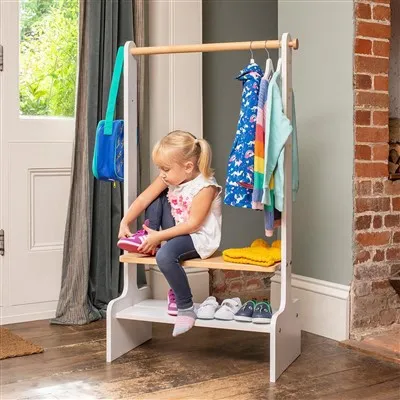
If you’re ready to talk about what works for your family, we’d love to walk you through our options, answer any questions you have about materials, safety testing, or pricing, and help you pick pieces that will grow with your kid. No pressure, no pushy sales pitches—just real advice from someone who’s been in this industry for years, and cares about the families we work with.
Kid’s Furniture References:
U.S. Consumer Product Safety Commission. (2022). Annual report on children’s furniture-related injuries and fatalities.
Environmental Working Group. (2021). Chemical exposure in budget children’s products: A national testing analysis.
American Chiropractic Association. (2020). Posture-related health outcomes in school-aged children linked to mismatched furniture height.
National Institute of Child Health and Human Development. (2019). Long-term durability of solid wood vs. particleboard furniture in household use with children.
Zhejiang Hanhao Industrial Co., Ltd.
Zhejiang Hanhao Industrial Co., Ltd. is one of the most experienced kid’s furniture manufacturers and suppliers in China, featured by quality products and good price. Please rest assured to buy durable kid’s furniture made in China here from our factory. Also, custom service is available.
Address: No. 1, East Road, Qixing Street, Nanhu District, Jiaxing City, Zhejiang Province, China
E-mail: admin@hanhaofurniture.com
WebSite: https://www.hanhao-furniture.com/
