Yo, folks! As a supplier of gasoline forklifts, I’ve gotten tons of questions about how these bad boys work. One of the most common ones is about the fuel injection system of a gasoline forklift. So, I thought I’d sit down and write this blog to break it all down for you. Gasoline Forklift
Let’s start with the basics. A fuel injection system in a gasoline forklift is like the heart of the operation. It’s responsible for getting the right amount of fuel into the engine’s cylinders at just the right time. This might seem like a simple task, but it’s actually super complex and plays a huge role in how well the forklift performs.
Back in the day, carburetors were the go – to for getting fuel into the engine. But they had their limitations. They weren’t always very precise in mixing the fuel and air, which could lead to things like poor fuel efficiency and higher emissions. That’s where fuel injection systems come in.
There are a few different types of fuel injection systems used in gasoline forklifts. The first one I’ll talk about is the throttle body injection (TBI) system. It’s kind of like a modern – day version of a carburetor. In a TBI system, there’s a single injector (or sometimes two) located in the throttle body. The throttle body is basically where the air comes into the engine. The injector sprays fuel into the air stream and then the mixture gets sucked into the cylinders.
The advantage of a TBI system is that it’s relatively simple and cheap to install and maintain. It’s a good option for smaller forklifts or those that don’t require super – precise fuel control. But the downside is that it’s not as accurate as some of the other systems. Since the fuel is sprayed all the way up at the throttle body, there can be some uneven distribution of fuel among the cylinders.
Another type is the multi – port fuel injection (MPFI) system. This one is a lot more common in modern gasoline forklifts. In an MPFI system, there’s an injector for each cylinder. The injectors are located right near the intake ports of the cylinders. This allows for a much more precise and even distribution of fuel to each cylinder.
The way it works is that the engine control unit (ECU) monitors a bunch of different sensors. These sensors measure things like the air temperature, engine speed, throttle position, and oxygen levels in the exhaust. Based on the data from these sensors, the ECU calculates exactly how much fuel each injector should spray into its respective cylinder.
This precision is really important. It means that the engine can run more efficiently, produce more power, and emit fewer pollutants. For a forklift, this translates into better performance, lower operating costs, and compliance with environmental regulations.
Then there’s the direct injection (DI) system, which is the most advanced of the bunch. In a direct injection system, the fuel is injected directly into the combustion chamber. This allows for even more precise control of the fuel – air mixture and better combustion.
Because the fuel is injected directly into the hot combustion chamber, it can evaporate more quickly. This leads to better mixing with the air and more complete combustion. As a result, direct injection engines can have higher power output, better fuel economy, and lower emissions.
But direct injection systems are also more complex and expensive. They require high – pressure fuel pumps and more sophisticated injectors. And since the fuel is injected directly into the combustion chamber, there’s a risk of carbon buildup on the injectors over time. This can lead to problems like rough idling and reduced performance.
So, how do you know which fuel injection system is right for your gasoline forklift? Well, it depends on a few factors. If you’re on a tight budget and you don’t need the highest level of performance, a throttle body injection system might be a good choice. It’s simple and affordable.
If you want a good balance between performance and cost, a multi – port fuel injection system is probably your best bet. It offers better fuel distribution and performance than a TBI system and is still relatively affordable.
If you’re willing to spend a little more and you need the highest level of performance and fuel efficiency, a direct injection system might be worth considering. But keep in mind that it will require more maintenance and you’ll need to be more careful about using high – quality fuel to prevent injector problems.
As a gasoline forklift supplier, I’ve seen firsthand how the right fuel injection system can make a big difference in a forklift’s performance. Whether you’re using the forklift in a warehouse, a construction site, or a manufacturing plant, having a well – functioning fuel injection system is crucial.
If you’re in the market for a gasoline forklift, or if you’re looking to upgrade the fuel injection system on your existing forklift, I’d love to talk to you. I’ve got a team of experts who can help you figure out which system is right for your specific needs. We can also provide you with top – notch maintenance and support to keep your forklift running smoothly.
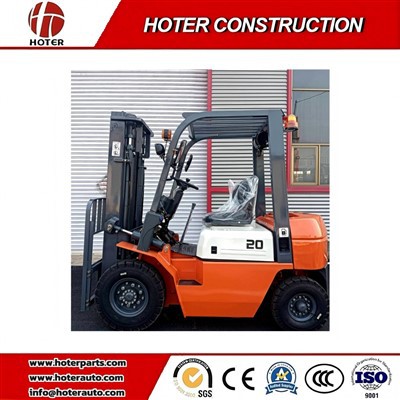
So, don’t hesitate to reach out. Let’s have a chat and see how we can get you the best gasoline forklift with the perfect fuel injection system for your business.
Side Wall Trailer References:
- Automotive Engineering textbooks on internal combustion engines
- Industry reports on forklift technology advancements
- Manufacturer’s manuals for gasoline forklift engines
Zhangzhou Hoter Construction Machinery and Parts Co., Ltd.
As one of the most professional gasoline forklift manufacturers and suppliers in China, we’re featured by quality products and good price. Please rest assured to wholesale high-grade gasoline forklift for sale here from our factory. Contact us for more details.
Address: No. 3/4-41, Ziwei Road, Longhai, Zhangzhou city, Fujian province, China
E-mail: info@hoterparts.com
WebSite: https://www.hoterparts.com/
